Case 10. Hand spasms
What is the lesion?
We are looking for a lesion that emerges post-trauma and can produce headache and focal seizures. The other clue is the delay - with the headache evolving over days, and the seizures emerging in that timeframe.
The big concern is blood within the cranial cavity - intracranial bleeding. There are various patterns of this.
An extradural haematoma is due to an arterial tear, mainly the middle meningeal artery. Blood gushes out under high pressure and rapidly causes neurological compromise including coma - and if not corrected quickly, death. The usual cause is high-impact trauma, for example assault or motor vehicle accident. The mechanism here sounds too minor, and the tempo too slow.
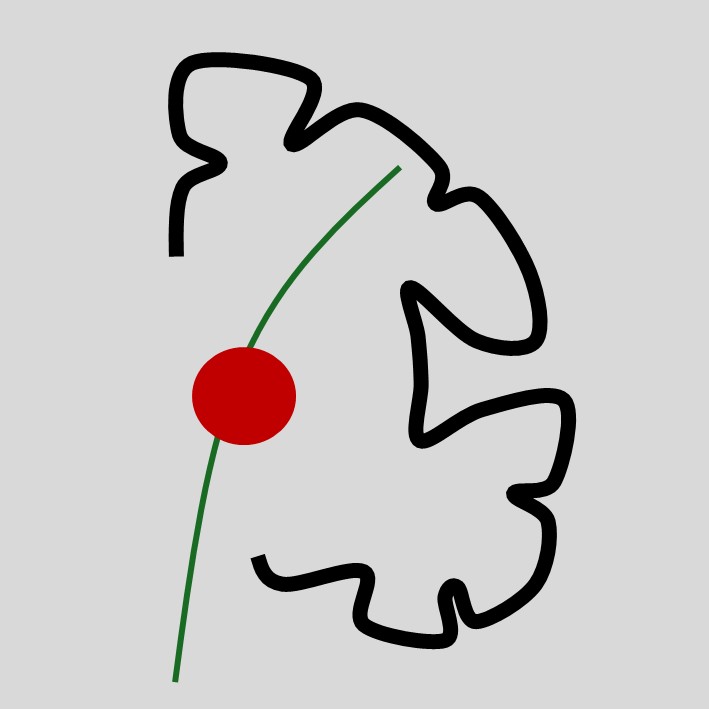
A subdural haematoma is due to tearing of the bridging veins that traverse the dura and enter the venous sinuses. The blood is not under such high pressure so accumulates more slowly - it can rapidly accumulate in the minutes and hours post-injury but often presents over a more gradual tempo, with delayed emergence of neurological features. In the elderly, subdural haematoma can develop more easily than in the young - brain volume loss due to aging means the bridging veins are more prone to tearing, and there is room to accommodate the blood while it accumulates slowly, leading to delayed presentations. Subdural haematoma can develop after relatively minor head strikes. This is clearly a concern here.
Trauma is a major cause of subarachnoid haemorrhage, with blood gathering around the brain, and this can also lead to neurological compromise - including seizures if the blood surrounds the cortex.
A major intracerebral haemorrhage is somewhat unusual after head injury, though more minor areas of blood - contusions - are common in traumatic brain injury, particularly in the frontal and temporal regions, which absorb much of the force of impacts.
It doesn't sound like this is likely to be anything else. If the patient had not had head trauma, we would be considering a broader differential for acute headache and seizures, including infection - but it seems unlikely that the head injury was unrelated.
Clinical formulation