Case 10. Hand spasms
Where is the lesion?
There are two symptoms here and we should consider both.
Firstly - a progressive headache, initially mild and now severe, in the right side of the head, emerging within several days of a head strike. This wasn't a severe head strike, and she didn't lose consciousness or display other features of traumatic brain injury such as confusion - but in older patients, even relatively minor impacts can have neurological consequences.
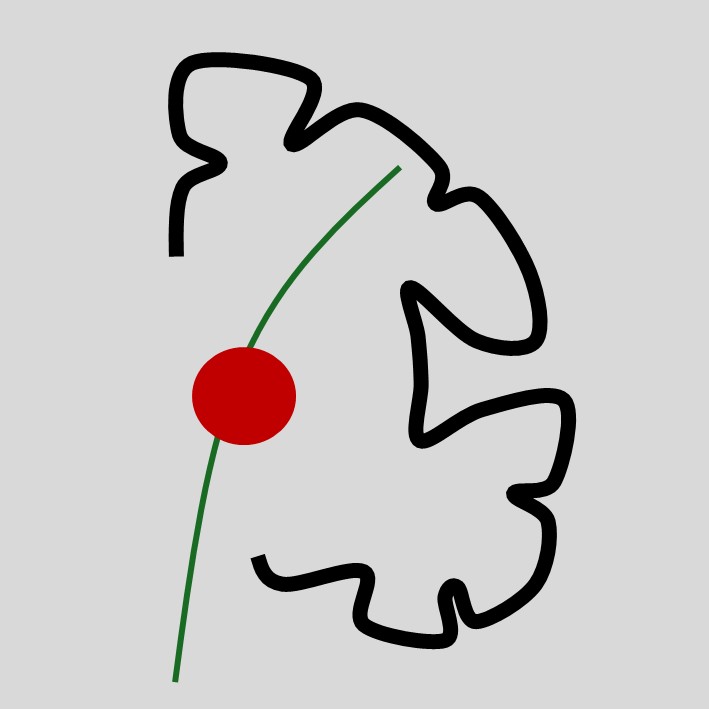
Secondly - recurrent, brief, involuntary spasm-like contractions in the left hand, sometimes associated with slurred speech, and followed by a brief period of weakness in the hand and sometimes facial drooping.
The headache alone might raise concern, but headache emerging after a delay following a head strike can also be migraine - which is common in this period. However, any new, severe headache in an older person has a higher probability of being due to serious pathology, and a headache with associated focal neurological features is particularly concerning.
The focal symptoms are stereotyped - the motor features are the same each time, although there is slight variation as sometimes speech is also affected - and they feature involuntary muscle contractions, and are followed by a period of hand weakness and facial drooping. This sounds like focal motor seizures with a post-ictal aftermath. The pattern localises to the motor cortex in the right hemisphere - specifically the more lateral aspects which represent the hand, face and tongue.
Headache and seizures following head trauma is deeply concerning for structural pathology.
What is the lesion?