
Case 17 - Slurred speech
Outcome
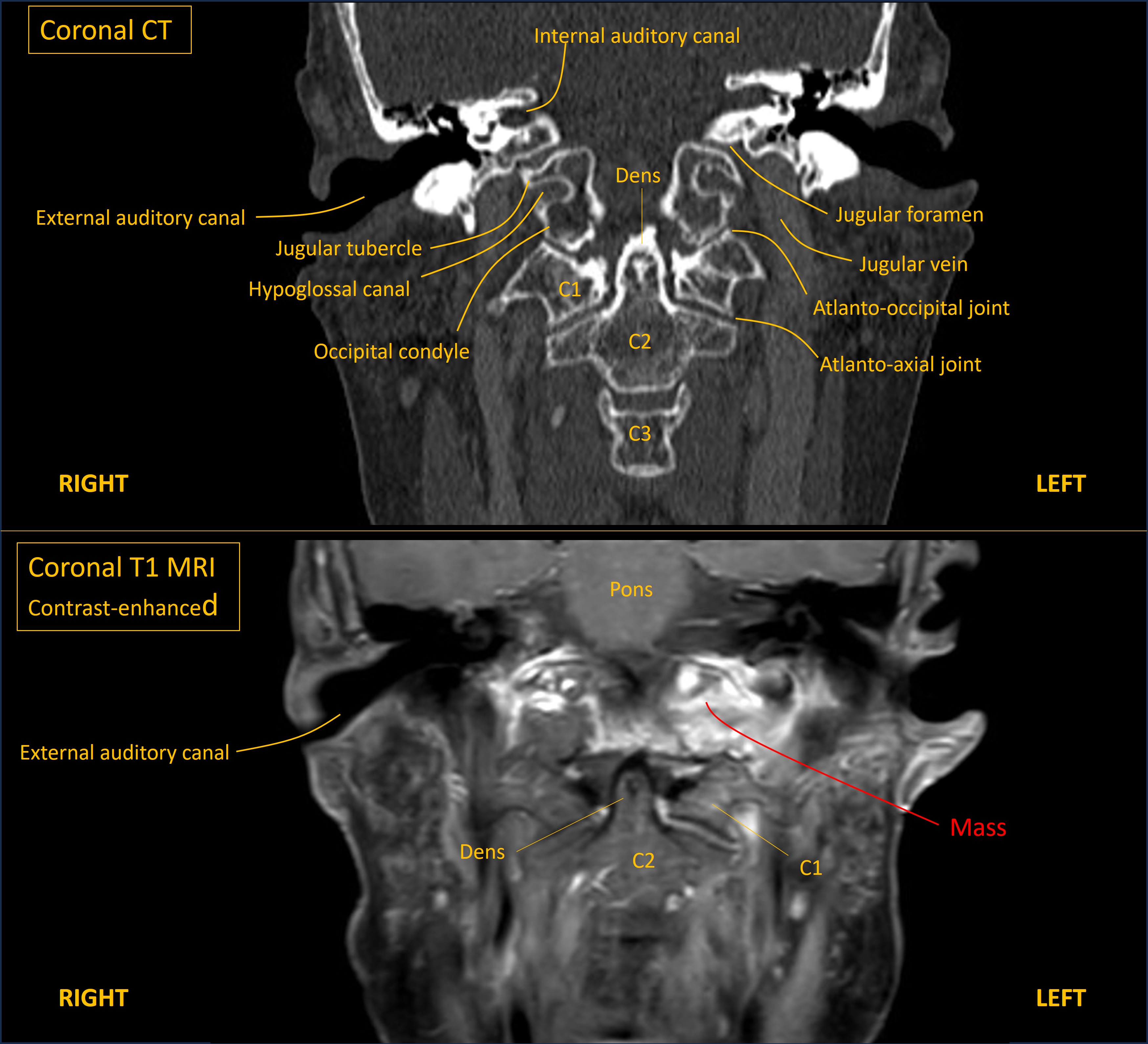
Urgent MRI head, skull base and neck were performed. These showed multiple bony metastases to the skull, including the skull base. A metastatic mass was invading the left occipital bone and affecting the hypoglossal canal, shown on the images below. The CT shows the key anatomy, and the MRI shows the mass:
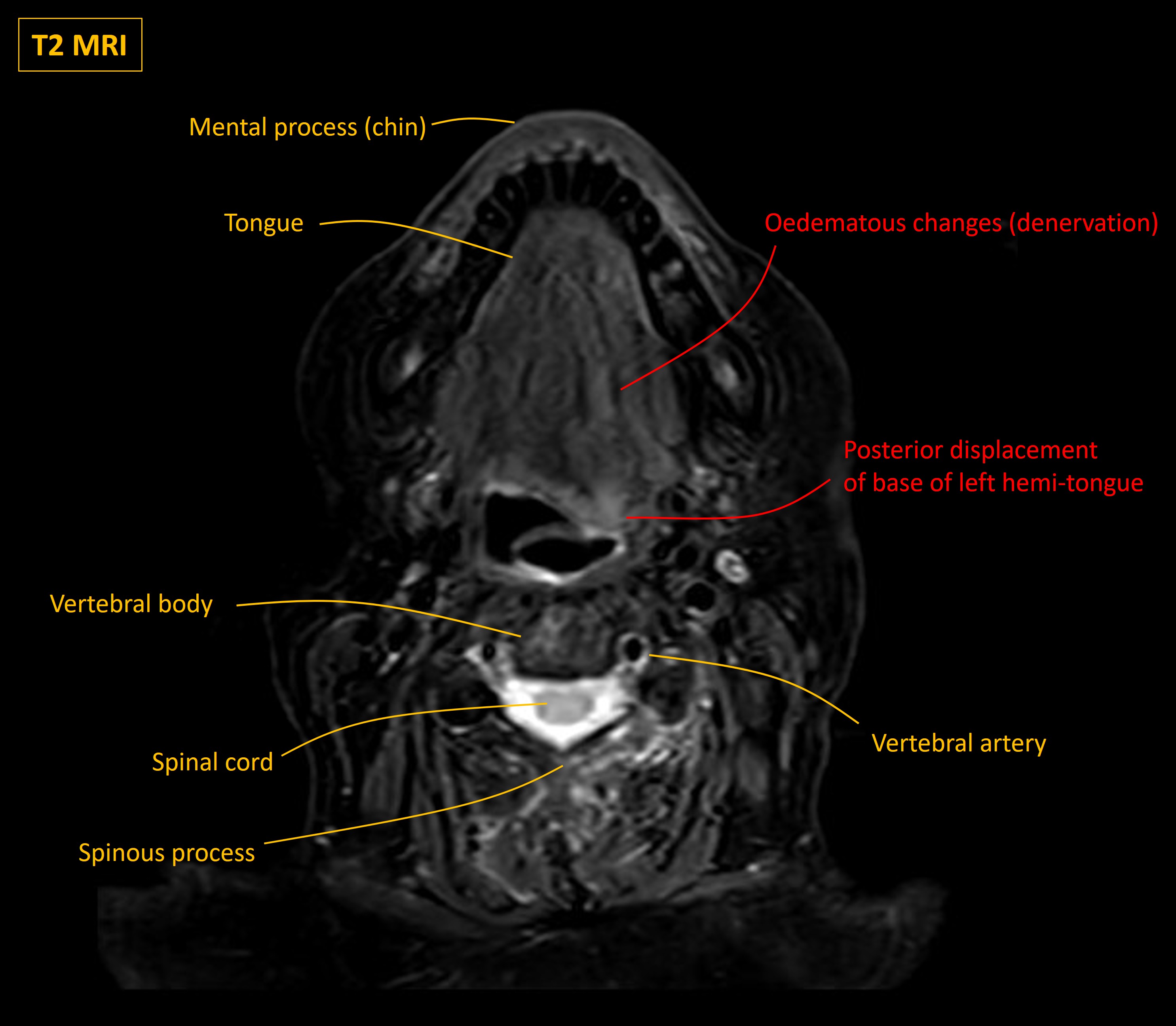
The left half of the tongue was visibly bright on T2 MRI, indicating oedema due to denervation, and the base was posteriorly displaced due to weakness.
Body imaging showed pelvic disease present - including recurrence within the rectum and adjacent nodal tissues.
The patient was treated with palliative radiotherapy, including to the skull. However, his condition rapidly deteriorated and died within two months of diagnosis.
Final diagnosisLeft hypoglossal palsy due to skull base metastasis affecting the hypoglossal canal, due to recurrence of previously-treated rectal cancer – with rapidly fatal outcome.
Key points