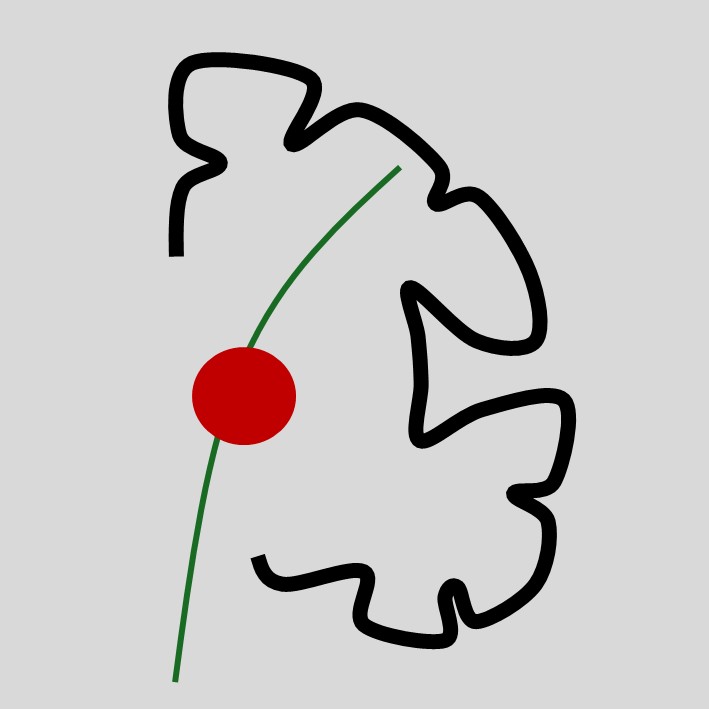
Case 6. Headache and arm movements during pregnancy
What is the lesion?
Any headache associated with a focal neurological deficit is quite likely to be due to a secondary cause - i.e. some sort of acquired lesion - and focal seizures in particular are a serious marker of pathology.
The presentation is acute – she was headache-free and seizure-free a mere 3 days earlier. That suggests that whatever this lesion is, it's something that develops over a short time span. It means slower-growing lesions such as tumours are less likely.
There are various causes of acute headache and seizures, listed in the box below. Pregnancy also increases the probability of some of these.
Text boxesVascular
Infection
Inflammation
Tumours (presentations sometimes are acute)
Severe hypertension
Drug abuse (e.g. amphetamine, cocaine)
Hydrocephalus
We can consider these further.
VascularA vascular disorder is certainly possible here.
Ischaemic stroke can happen during pregnancy, but this is unlikely – she has no focal deficits (bar briefly after the seizures), no obvious vascular risk factors (although this doesn't by any means rule out a stroke), and most importantly a stroke is not a common cause of seizures in the acute phase (first few days) - i.e. acute symptomatic seizures . It is a major cause of delayed development of seizures in the recovery and chronic phases - i.e. post-stroke epilepsy - but that is a separate situation. Finally, an acute headache is not typical in ischaemic stroke, except in posterior circulation territory events where it is relatively common.
An intracerebral haemorrhage is possible - but again we would usually expect focal deficits in addition to the intermittent seizures.
Subarachnoid haemorrhage can cause headache and seizures, but the history of gradually increasing, moderate headache here is not typical of subarachnoid haemorrhage - the headache is usually sudden-onset and very severe from the start ( thunderclap headache).
There is no history of trauma, so subdural and extradural haemorrhage are unlikely, and while spontaneous causes do exist (particularly coagulopathies), this is unusual, and there is no other clue to suggest this.
One atypical vascular lesion is important to consider here - cerebral venous sinus thrombosis (CVST). Third trimester pregnancy is a high risk period for venous thromboembolism, including CVST, due to increased coagulability of blood. CVST can cause new-onset seizures and headache, and the headache is not always severe or sudden-onset - it can develop more gradually and clinically resemble migraine.
InfectionInfection is worth considering, and early recognition and treatment is life-saving. However, there are no clinical features suggesting meningoencephalitis nor abscess - we would usually expect some of these, for example fever, neck rigidity or photophobia.
Other causesAutoimmune disorders are in general less common during pregnancy. Autoimmune encephalitis can develop in young women - particularly anti-NMDA receptor encephalitis - but this tends to cause cognitive and behavioural changes in addition to seizures and other features, and headache is not common. A variety of systemic inflammatory disorders can involve the nervous system but they often have additional features such as skin, joint or lung involvement - here there are none.
A tumour is possible - but acute headache and seizures presenting at once with no prior features in the preceding weeks (such as headaches or focal symptoms) is not typical, bar for larger lesions with marked cerebral oedema.
Eclampsia is an important consideration - it causes hypertension, seizures and can feature headache - but the blood pressure is normal. It is always worth checking urine for proteinuria and obstetricians do this routinely. Focal seizures would be unusual - they are usually generalised.
Likewise, with normal blood pressure, other hypertensive encephalopathies such as PRES are unlikely, and there is usually confusion and visual disturbance in PRES.
We aren't told of any drug abuse - but people don't always volunteer this and sometimes we rely on clinical clues, such as high temperature, sweating, pupillary abnormalities or signs such as clonus or rigidity. Combinations of features associated with a particular drug are known as a toxidrome . Here there are no other features suggestive of any specific drug toxicity state.
ConclusionWe can't say exactly on clinical grounds what the cause is but there is likely to be a structural lesion - and given the short history and absence of other features, a major concern is CVST. Other vascular lesions are possible too. Clearly this patient needs urgent imaging - the risks of delaying this are high, so the radiation risk is justified, even in pregnancy.
Clinical formulation